Step 1: tree and grove (year-round)
- Winter pruning (Jan-Mar): regulates the canopy, favours light, sets the harvest
- Cover crops and organic fertilising: legumes sown between trees fix nitrogen. No chemical fertilisers.
- Organic pest defence: constant monitoring of the olive fly (Bactrocera oleae), main enemy, and natural treatments (kaolin, protein baits)
Step 2: ripening (Aug-Nov)
Three key transformations:
- Chlorophyll decreases: colour passes from green to straw to violet to black
- Phenolic compounds evolve, with patterns that vary by cultivar, season and environment
- Oil content increases
Harvest timing is an agronomic and sensory compromise reassessed each year: yield, fruit condition, aromas and phenolic profile do not evolve identically in every cultivar or climate.
Step 3: harvest (Oct-Dec)
Three methods:
- Hand-picking: selective but slow and expensive.
- Mechanical combing: improves efficiency; correct setup limits damage to fruit and branches.
- Tree shaking: suited to compatible trees and groves; impact depends on machinery and operation.
Fruit should stay intact and aerated and be milled promptly. Delays and poor storage can encourage fermentation, hydrolysis and quality loss, at rates that depend on fruit condition and temperature.
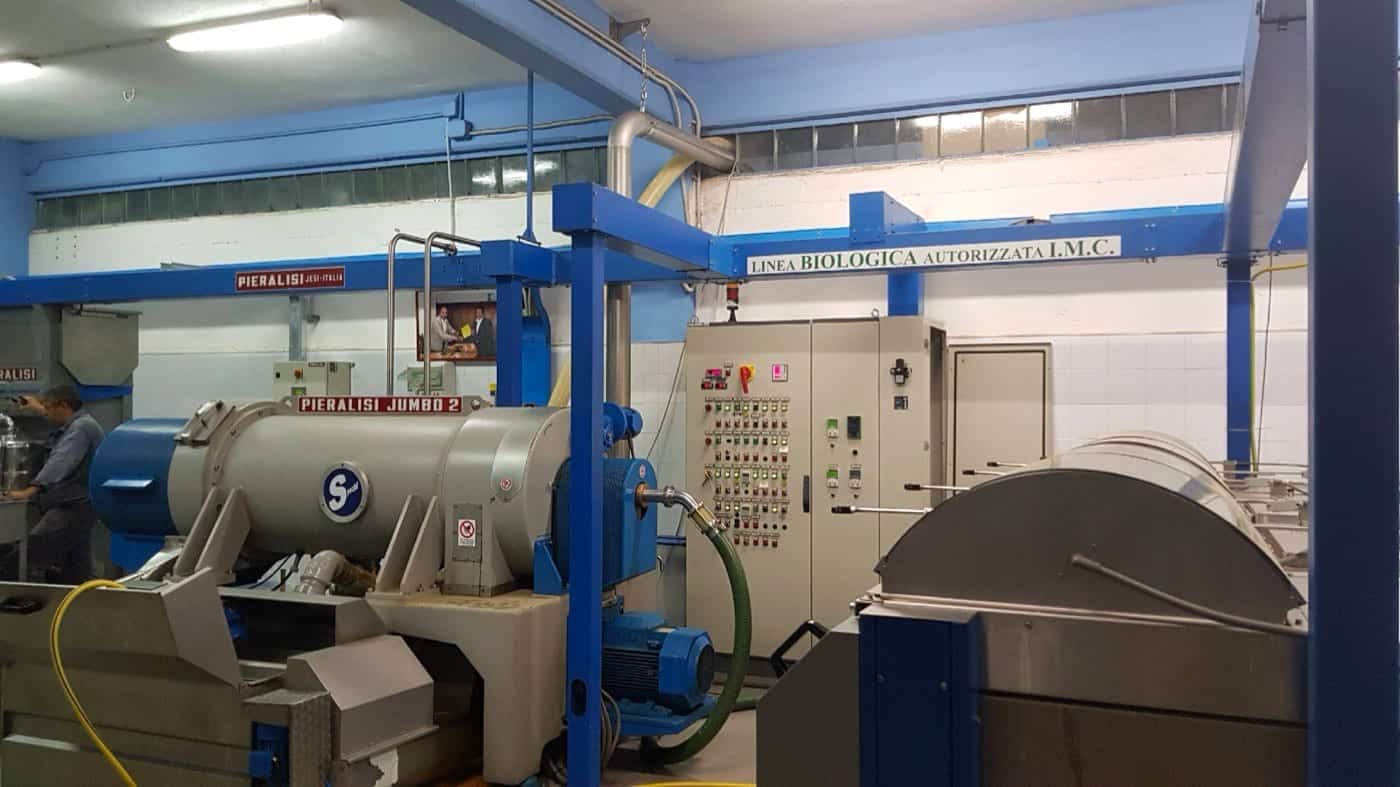
Step 4: the mill (same day)
- Defoliation and washing: leaves, soil, twigs removed. Modern washers include a clean-water shower.
- Crushing: hammer crushers (most common) or stone mills (traditional, rare today).
- Malaxation: paste mixed at controlled time and temperature, adjusted to cultivar, maturity and production goal.
- Extraction: a centrifuge (decanter) separates oil from vegetation water and pomace. No solvents.
The optional “cold extraction” claim is reserved for extra virgin or virgin oils obtained below 27°C by percolation or centrifugation of the paste. It is a precise legal condition, while quality depends on the whole time-temperature profile and all earlier stages.
Step 5: filtering, storage, bottling
Filtering with cardboard filters removes mosto residues, extending shelf life. Storage in stainless steel tanks under inert gas (nitrogen or argon) prevents oxidation. Ideal cellar: 14-18°C, stable, dark. Bottling in dark glass or metal tins protects from light and oxygen.