Start with the category and origin
First check that the sales name says extra virgin olive oil, rather than simply "olive oil" or "olive-pomace oil". These are different legal categories. Read the origin statement separately: an Italian seller or an Italian-sounding brand name does not, by itself, tell you where the olives were grown and the oil obtained.
The lot identifier and best-before information help you identify and manage the bottle. A producer may also tell you the cultivar and the harvest year, but those are not universal requirements for every extra virgin olive oil label. A declared harvest year should describe oil from that harvest, not be treated as a quality score on its own.
What 'cold extraction' does and does not say
"Cold extraction" and "first cold pressing" are regulated optional terms, not conditions that every extra virgin oil must print. They refer to different extraction methods under specified temperatures. An oil without either phrase is not automatically inferior; the production process and the sensory result need to be considered together.
The European Commission explains the categories and optional label information in its overview of olive-oil marketing rules. If a label makes a specific claim, read the wording rather than assuming that a familiar phrase guarantees better flavour.
Check how the bottle has been kept
Light, heat and air can change an oil long before its best-before date. Dark glass and tins protect it from light better than a clear bottle left under strong shop lighting, but packaging alone cannot tell you how it was stored in a warehouse or kitchen. At home, close it promptly and keep it away from the cooker and direct sunlight.
Then smell and taste it
Pour a little into a clean glass or spoon. Fruitiness may suggest cut grass, tomato, artichoke, apple or almond, depending on the olives and harvest. Bitterness and a peppery sensation are possible characteristics, not defects by themselves; a mild oil can still be extra virgin. A stale, waxy or markedly rancid smell is a different warning sign.
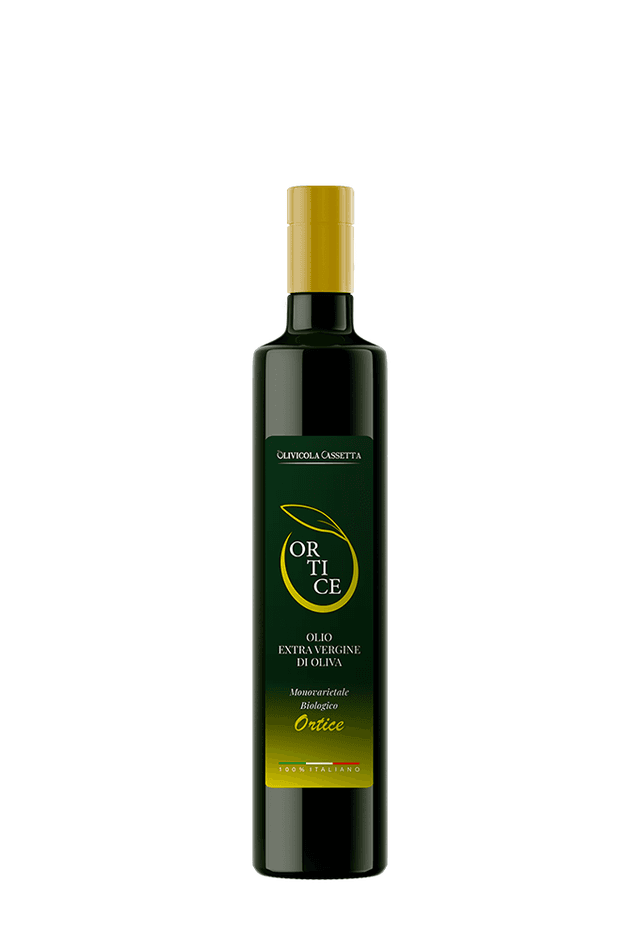
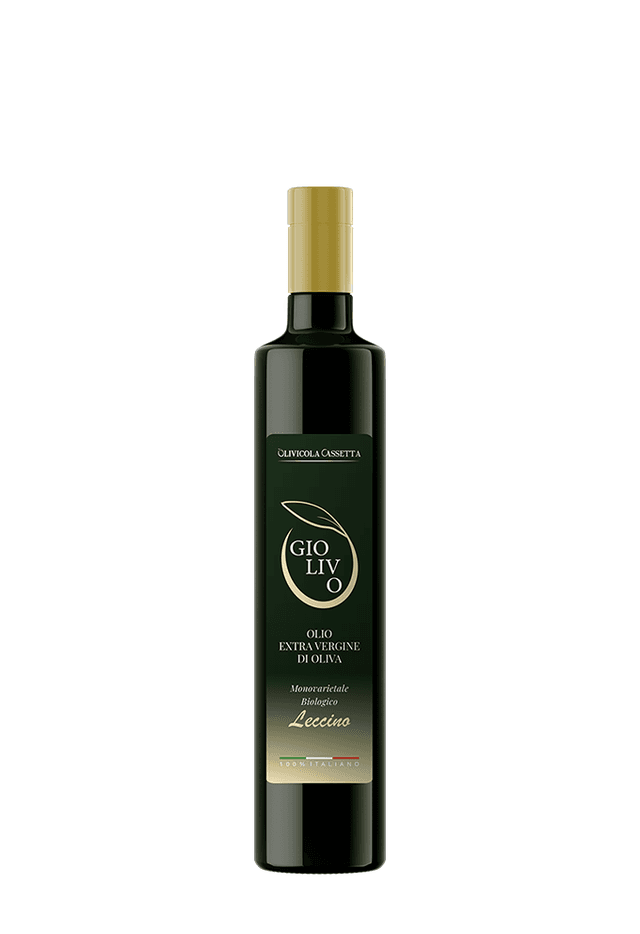
Taste the oil on its own before judging it in a dish. Our Giolivo is relatively gentle, while Ortice is more assertive; those are different profiles, not ranks in a universal quality league. Read the notes for the specific oil and, if possible, compare two bottles side by side.
Ask questions instead of using a price rule
Price reflects harvest yield, production costs, packaging, distribution and margins; a single euro-per-litre threshold cannot prove that an oil is genuine or good. Buying direct lets you ask the producer about the current lot and storage, but a reputable shop can also provide useful information. If the origin or category seems unclear, ask before paying.