What does good olive oil taste like?
The three positive attributes used by professional tasters are fruity, bitter and pungent. Fruitiness is the smell and taste of healthy olives, from green notes of cut grass, tomato leaf and artichoke to riper notes of almond, apple and flowers. Bitterness is felt on the tongue; pungency is the peppery sensation at the back of the throat.
Labels and shops often group oils by intensity:
- Mild or delicate: light fruitiness, little bitterness and pepper. Suits fish, steamed vegetables, mayonnaise and baking.
- Medium fruity: balanced, the most versatile for everyday cooking and salads.
- Robust or intense: pronounced green fruit, clear bitterness and a persistent peppery finish. Stands up to beans, soups, grilled meat and bitter leaves.
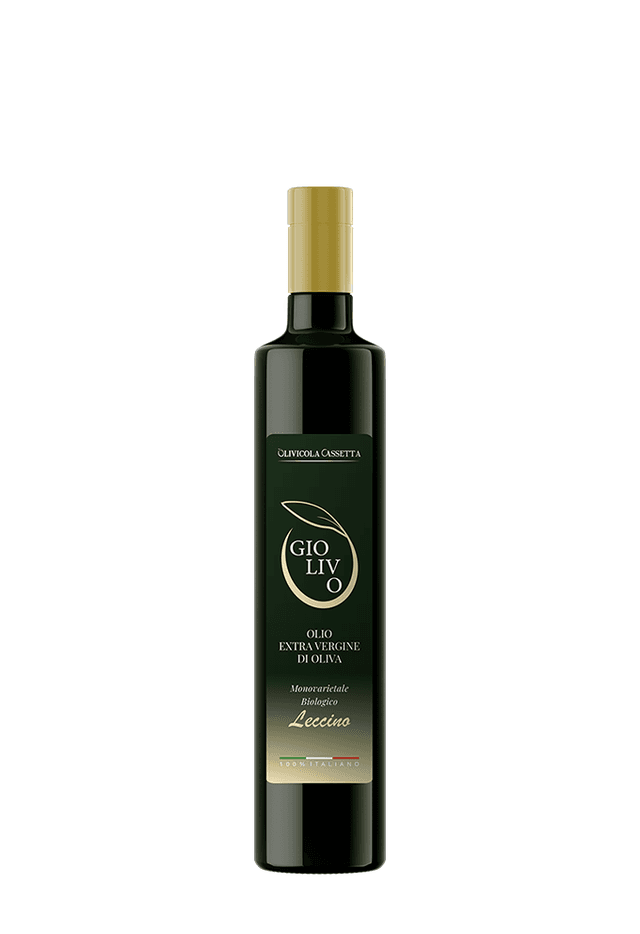
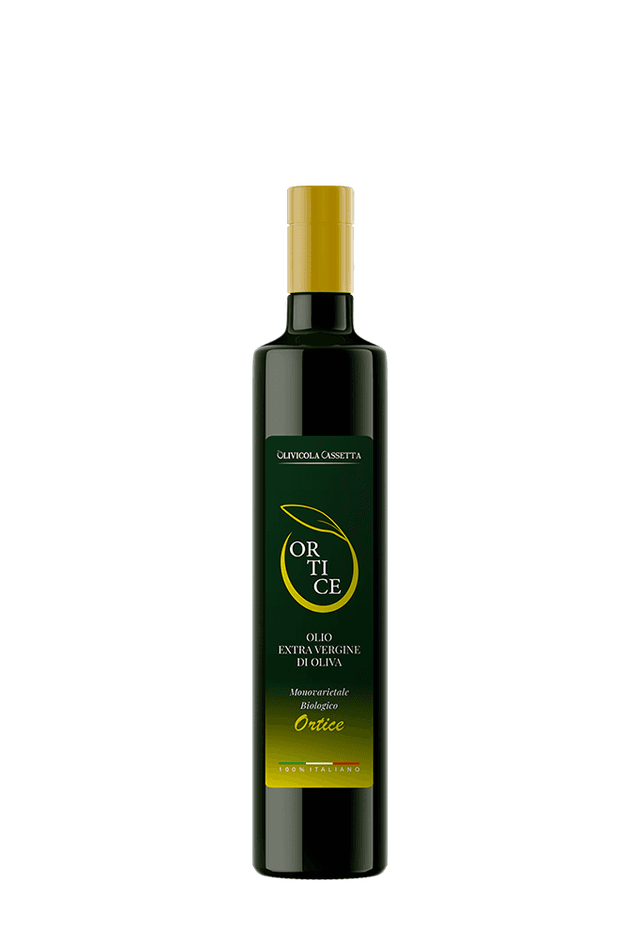
A finishing olive oil is simply an aromatic oil added raw at the end, so its flavour is not lost to heat. Our Giolivo, from Leccino olives, is a mild profile; Ortice is a robust one.
How to taste olive oil at home
- Pour about a tablespoon into a small glass. Cover it with your hand and warm it for a minute: aromas open up near 28 °C.
- Smell: uncover and inhale slowly for a few seconds. Note the intensity of the fruit and anything specific you recognise.
- Sip a small amount, spread it over your tongue, then draw in a little air through your teeth. This carries the aroma to the back of the nose.
- Swallow and wait: bitterness and pepper often arrive after a few seconds. A cough is a common reaction to a very pungent oil.
- Reset with a slice of green apple or a sip of water before the next oil.
Compare two or three oils side by side, in identical glasses and without looking at the labels if you can. Colour tells you nothing about quality, which is why professional tasting glasses are dark blue.
Defects: smells that should not be there
Some aromas indicate a problem with the olives, the processing or the storage, and are not part of any variety's character:
- Rancid: crayons, putty, stale nuts. The oil has oxidised.
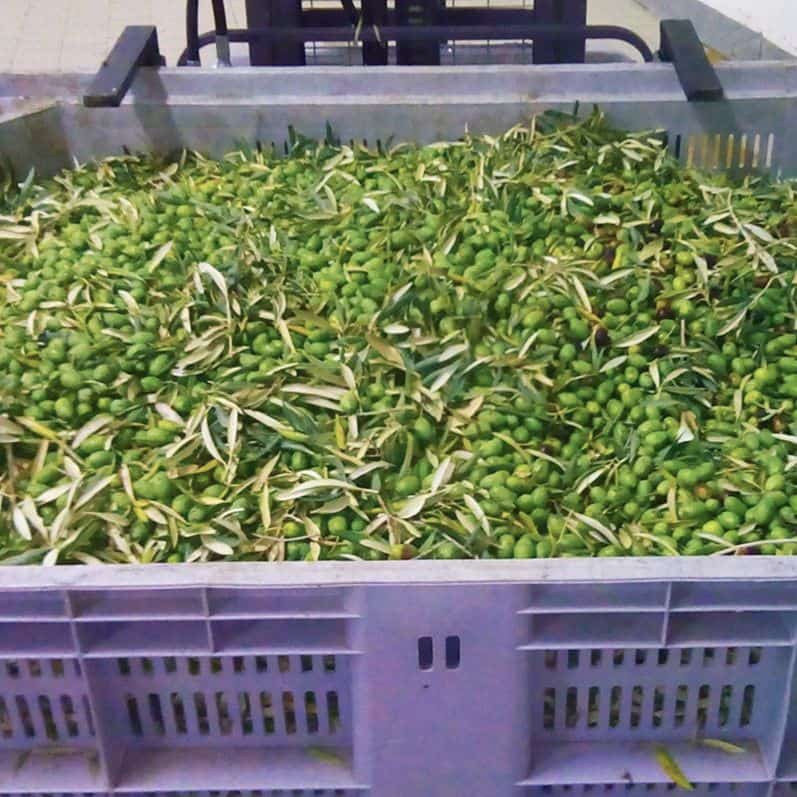
- Fusty or muddy: fermented olives or damp earth, from fruit left too long before milling.
- Musty: mould or a damp cellar.
- Winey or vinegary: a sour, fermented note.
An oil with a clear defect cannot be extra virgin under EU rules. At home you can notice these smells, but only an accredited panel can formally classify an oil. Our guide on how olive oil goes bad explains how to slow rancidity.
Home tasting and the official panel test
The legal category of an olive oil is decided by a panel of 8 to 12 trained tasters following the International Olive Council method COI/T.20/Doc. No 15, with anonymous samples and statistical treatment of the results. Extra virgin requires a median of defects of zero and some fruitiness.
Your own tasting answers a different question: which oil you like, and with which food. Both are useful, as long as they are not confused.